
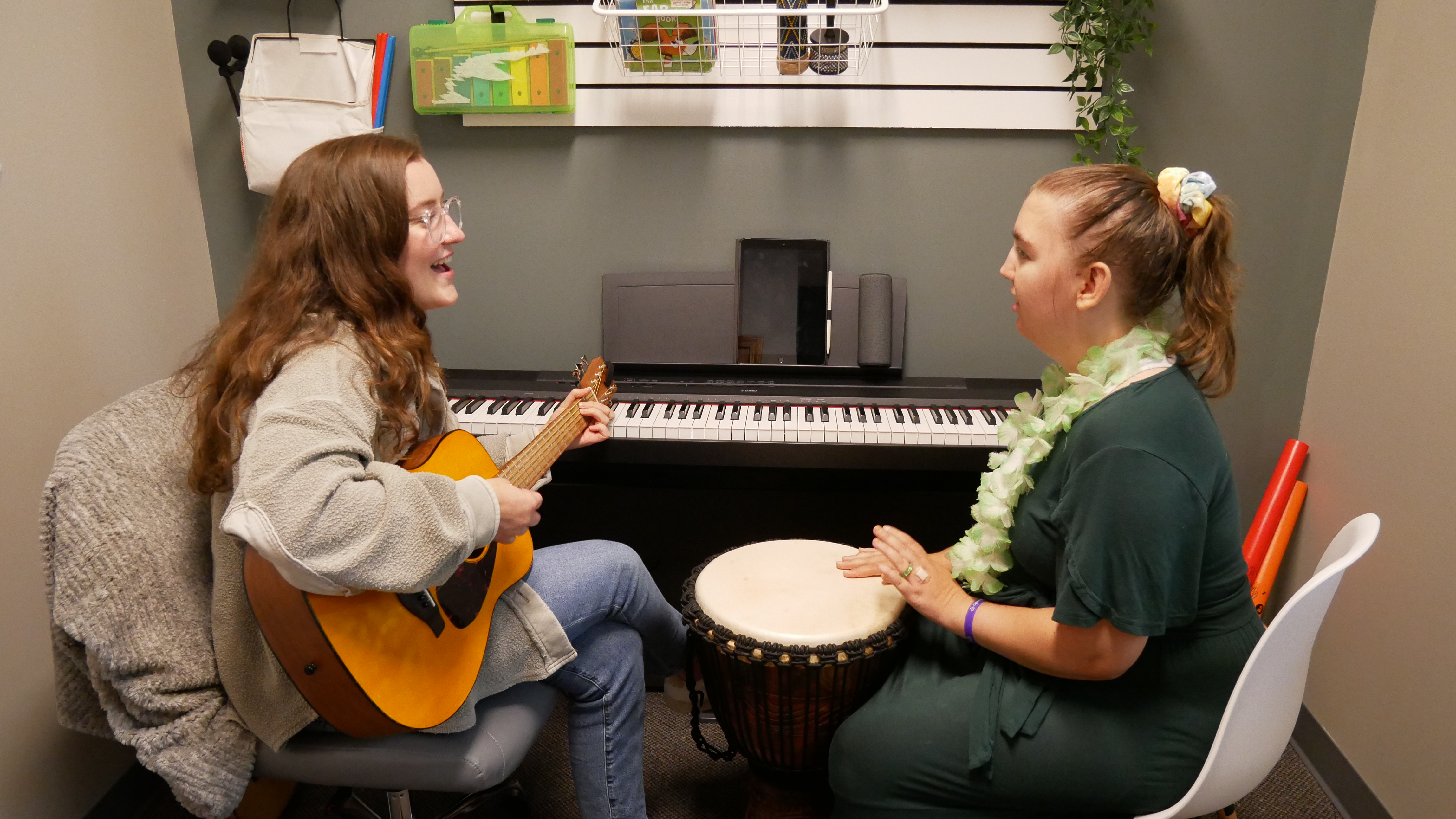

As music therapists, our work is inherently relational—our success hinges on the trust and connection we build with our clients. One powerful tool in fostering these connections is active listening. Let’s dive into how active listening enhances the therapeutic relationship, making your sessions more personalized, impactful, and effective. By focusing on both verbal and non-verbal cues, you’ll learn how to create a safe, supportive space where clients feel truly heard. Plus, we’ll discuss how to incorporate reflective listening and spontaneous music-making to deepen your therapeutic practice.
What Is Active Listening in Music Therapy?
Active listening goes beyond just hearing what your client says. It involves being fully present, both emotionally and physically, and tuning into both their words and non-verbal signals. In music therapy, this means paying close attention to your client’s body language, tone, rhythm, and even how they engage with the music itself.
In the context of client-centered therapy, active listening forms the foundation of the therapeutic relationship. By demonstrating that you understand and empathize with the client’s experience, you create a deeper sense of connection, which ultimately leads to more meaningful therapeutic outcomes.
Why Is Active Listening Important for Music Therapists?
Active listening enhances the quality of your sessions in several key ways:
- Building Trust and Rapport: When clients feel truly heard, they are more likely to open up and share their emotions, thoughts, and experiences. This leads to a stronger, more trusting therapeutic bond.
- Understanding the Client’s Needs: Listening carefully enables you to better understand your client’s needs, desires, and goals for therapy. This helps you tailor music interventions that are more relevant and impactful.
- Fostering a Safe Environment: Active listening demonstrates that you respect and validate the client’s feelings, creating a safe, non-judgmental space where they can express themselves without fear.
- Personalizing Therapy: By picking up on subtle cues, you can adjust your musical interventions—whether it’s the tempo, style, or instrumentation—to match your client’s emotional state or preferences, fostering deeper engagement.

Key Techniques to Implement Active Listening in Your Sessions
1. Reflective Listening: Echoing What You Hear
Reflective listening involves paraphrasing or summarizing what your client shares to confirm that you understand their message. In music therapy, this can look like reflecting both verbally and musically.
2. Tuning Into Non-Verbal Cues
Sometimes, what’s most important is what’s not being said. Pay attention to body language, facial expressions, and even the way a client interacts with instruments or music. Is the client tapping along with the rhythm, or are they withdrawing? These subtle cues can offer insights into their emotional state or preferences.
3. Spontaneous Music-Making: Responding in Real-Time
Spontaneous music-making allows you to respond to your client’s emotions in real-time through improvisation. This technique is powerful for deepening the connection between you and your client, as it allows the music itself to become a form of communication.
Practical Tips for Implementing Active Listening
- Be Fully Present: Put away distractions, such as phones or paperwork, and create a focused, intentional environment for your session.
- Ask Open-Ended Questions: Encourage your client to share by staying curious and asking questions that allow for elaboration. For example, “Tell me more”
- Pause and Wait: After your client shares something, give them time to reflect and process their thoughts. Silence can be powerful in allowing clients to collect their emotions or choose their words.
- Empathetic Responses: Respond with empathy, not only through words but through your music. Reflecting emotions through music can offer clients a sense of being truly understood.
The Role of Active Listening in Relationship-Based Music Therapy
At the heart of relationship-based therapy is the idea that the therapeutic process is a collaborative effort between therapist and client. Active listening strengthens this collaboration by establishing a mutual understanding and respect. As you tune into your client’s emotions and responses, you can co-create an experience that feels deeply personal and responsive to their needs.
By actively listening, you’re not just reacting to your client’s words or actions, but you’re engaging in a dynamic process of co-regulation, where both the therapist and client tune into each other’s emotional and physical rhythms. This makes therapy feel more like a partnership and less like a one-sided intervention.
Strengthening Your Music Therapy Practice Through Active Listening
Incorporating active listening into your music therapy sessions doesn’t just improve the therapeutic outcomes, it deepens the relationship between you and your clients. Whether you’re reflecting their emotions through music, responding to their non-verbal cues, or improvising in the moment, active listening allows you to build a more personalized and empathetic therapeutic experience.
By taking the time to truly tune into your clients, you help them feel seen, heard, and valued—making your music therapy sessions more effective, fulfilling, and transformational. Remember, it’s not just about what they say in sessions—it’s about how deeply you listen.
Explore Our Posts

Follow us on Instagram for more professional tips to improve your therapy practice @LearnWithMainstay


One response to “The Power of Active Listening in Music Therapy”
[…] These questions help you build a picture of their preferences and emotional associations with music. If the person you are supporting is unable to answer these questions, then it’s time to employ your observation skills to view their responses to various musical components. (learn more about Active Listening in our previous post here) […]